
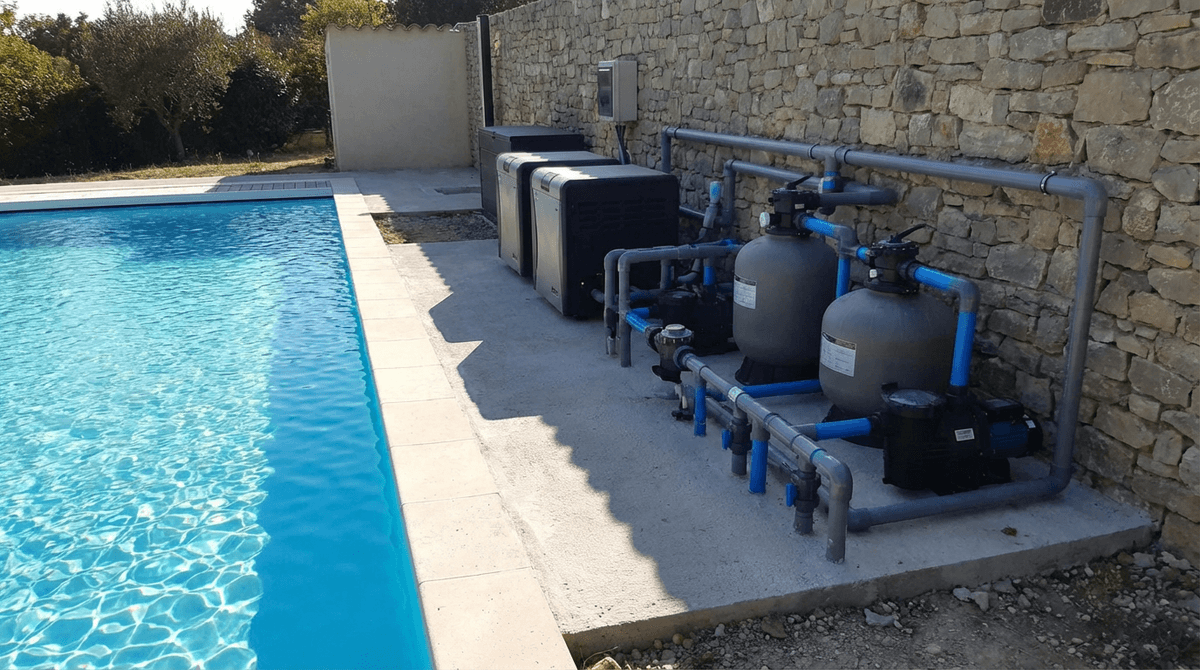
Pool heater electrical use varies widely: many electric resistance pool heaters draw around 5,000 to 18,000 watts, while pool heat pumps often draw about 1,500 to 7,000 watts of input power.
For full system planning, use the WattSizing Calculator.
1) Load shape and what changes draw
“Pool heater” can refer to different technologies:
- Electric resistance heater: converts electricity directly to heat, usually high wattage.
- Pool heat pump: moves heat from outdoor air to pool water, so electrical input is lower than delivered heat.
- Gas heater: mostly uses fuel for heat and relatively low electricity for controls/fan/pump support.
For electric planning, always focus on the actual electrical input of your specific heater model. Resistance heaters are usually difficult to run on small backup systems because of sustained high draw.
If you are comparing other large HVAC-style loads, see How Many Watts Does a Heat Pump Use and How Many Watts Does a Central Air Conditioner Use.
2) Typical watt ranges (label first)
| Pool Heater Type | Typical Electrical Running Watts | Typical Starting Watts |
|---|---|---|
| Electric resistance (small) | 5,000 - 8,000 W | 5,000 - 8,500 W |
| Electric resistance (medium) | 8,000 - 12,000 W | 8,000 - 12,800 W |
| Electric resistance (large) | 12,000 - 18,000 W | 12,000 - 19,000 W |
| Pool heat pump (small) | 1,500 - 3,000 W | 2,200 - 4,500 W |
| Pool heat pump (large) | 3,000 - 7,000 W | 4,500 - 10,000 W |
3) Session or daily kWh example
Example: A pool heat pump draws 3,200 W while heating and runs 5 hours per day:
kWh/day = (3,200 x 5) / 1000 = 16.0 kWh/day
At $0.17/kWh, that is about $2.72/day or around $82/month.
For day-based scenarios, see How Many Watts Does a Pool Heater Use Per Day and compare with spa usage in How Many Watts Does a Hot Tub Heater Use.
4) Practical ways to reduce energy impact
- Use a pool cover to reduce overnight heat loss and shorten heater runtime.
- Heat during warmer daytime periods when heat pumps operate more efficiently.
- Keep target water temperature realistic; each degree increase adds energy use.
- Maintain clean filters and proper flow to keep heater operation efficient.
5) Backup sizing context
Use Generator running watts vs starting watts to model overlap with other home loads, not this row in isolation. For small systems, validate Inverter sizing for off-grid solar and waveform trade-offs in Pure sine vs modified sine.
FAQs
Are electric resistance pool heaters expensive to run?
Often yes, because they use high sustained wattage. They can be practical for short boosts but costly for frequent long heating cycles.
Does a pool heat pump use less electricity than an electric resistance heater?
In most cases, yes. Heat pumps usually require lower electrical input for equivalent heating output.
Can I run a pool heater on a standard home inverter?
Most full-size electric pool heaters are too large for typical home battery inverters. Pool heat pumps may be possible with appropriately sized systems.
Sources
- U.S. Energy Information Administration (EIA) - Electricity explained
- U.S. Department of Energy - Energy Saver
- ENERGY STAR - Save Energy at Home
CTA
Planning pool heating loads for solar or backup? Use the WattSizing Calculator to estimate realistic power, runtime, and total system requirements.


