
Solar and batteries on boats power lights, fridge, instruments, and charging. Sizing uses the same daily energy and peak sun hours logic, with extra attention to marine environment, voltage, and weight. This guide covers the basics.
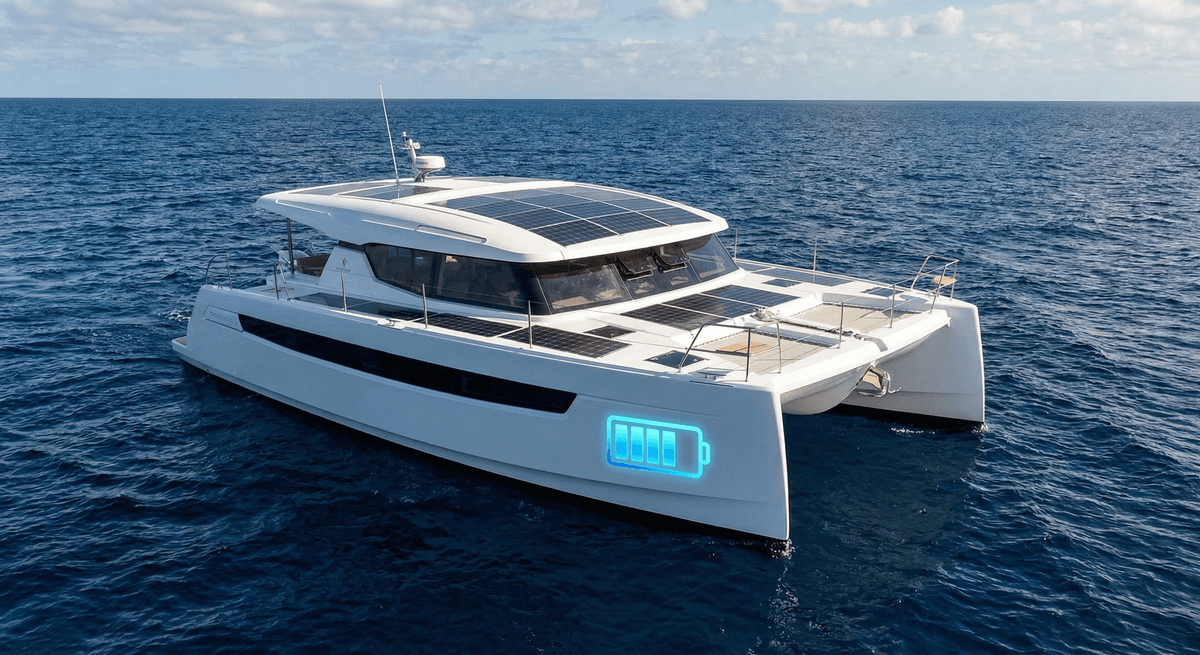
Same Math, Marine Constraints
- Daily use (Wh): Add up all loads (watts × hours). Fridge, nav, lights, radio, charging are common. Use a load list.
- Peak sun hours: Use conservative values; shading from mast, bimini, and movement reduces yield. Sometimes 2–4 hours equivalent is realistic.
- Battery: LiFePO4 is ideal for boats: lighter, more usable capacity, no gassing. Capacity in Ah at 12V or 24V is common; convert to Wh (V × Ah) for sizing.
12V vs 24V
Many boats are 12V. For larger systems, 24V reduces current and cable size; use a DC-DC step-down for 12V instruments if needed. See 12V vs 24V vs 48V.
Marine Environment
- Panels: Marine-rated or corrosion-resistant mounting; secure against vibration and spray. Flexible panels can fit curved surfaces but may have shorter life.
- Batteries: In a dry, ventilated area; LiFePO4 tolerates movement and tilt better than lead-acid.
- Wiring: Marine-grade, correct gauge, and proper fusing.
Summary
List loads → daily Wh. Choose sun hours (conservative) and days of autonomy. Size array and battery; prefer LiFePO4 and MPPT. Use the WattSizing calculator to get numbers, then pick marine-suitable panels and batteries.


