
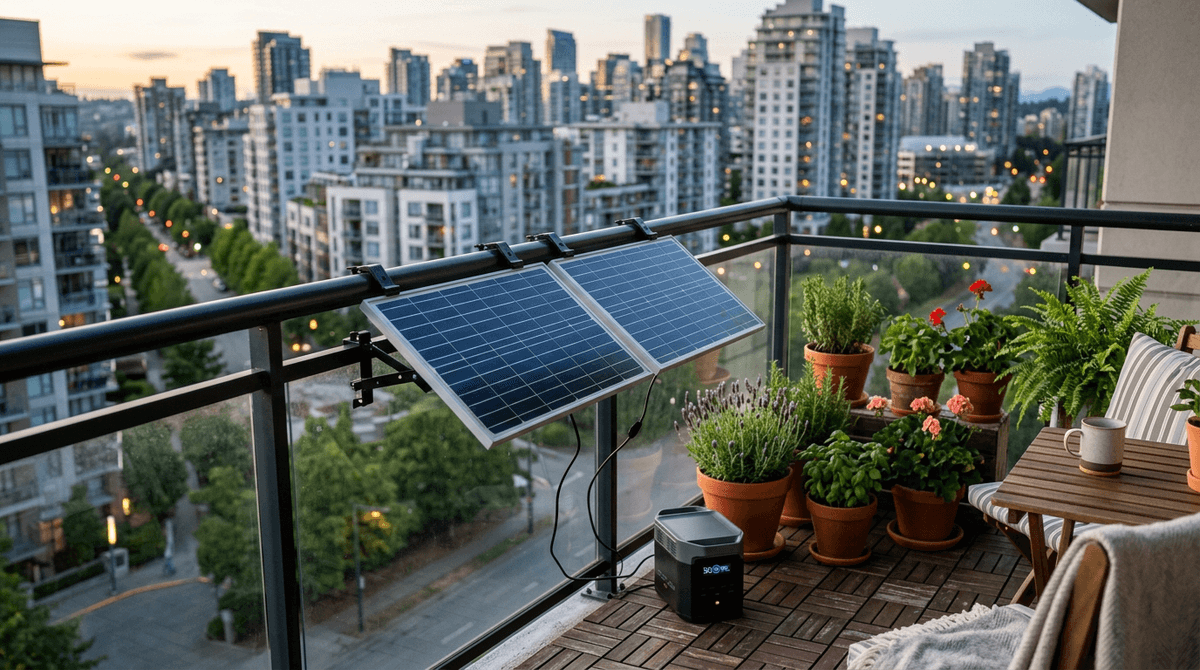
You don’t need to own a roof to use solar. In 2026, renters and apartment dwellers can use balcony panels, portable solar generators, or community solar to cut grid use, charge devices, or keep essentials running during outages. This guide covers practical options and what to watch for with leases and landlords.
For sizing small systems, see daily energy use and our calculator. For portable all-in-ones, see solar generator vs DIY and portable solar for camping.
Why Apartments and Renters Are Different
- No roof rights: You usually can’t install a full rooftop array. Options are balcony/patio, portable, or off-site (community solar).
- Lease and rules: Lease terms and HOA/landlord rules may limit what you can mount or plug in. Always check before buying.
- Small scale: Balcony and portable setups are typically 100–600 W and 0.5–2 kWh storage—enough for lights, charging, small appliances, and backup, not whole-home use.
Balcony and Patio Solar (Plug-in or Battery)
What it is: Small panels (often 1–2) mounted on a railing, wall, or stand on a balcony or patio, feeding a battery pack or plug-in inverter (where allowed). In some regions, “balcony power plants” can plug into a dedicated outlet and feed the apartment (subject to local rules and equipment).
Typical size: 200–600 W of panels; 0.5–2 kWh battery. Enough for phone/laptop charging, LED lights, router, small fridge or fan for part of the day. See how many panels to run appliances.
Pros: Uses your own space; no roof; often removable when you move. Cons: Shade and orientation limit output; lease/landlord may restrict mounting or wiring.
What to check: Lease language on “alterations,” “fixtures,” and “external attachments.” Get written permission if you mount anything. Prefer non-penetrating mounts (railing clamps, weighted stands) so you can remove everything when you leave.
Portable Solar Generators
What it is: All-in-one solar generator (battery + inverter + charge controller) plus foldable or rigid portable panels. You charge the unit from the panels (or from the grid), then run lights and small appliances from the unit. No permanent install. See solar generator vs DIY.
Typical size: 300–1,500 W panels; 0.3–2 kWh internal battery. Good for charging devices, camping, and backup during outages (fridge, modem, medical device).
Pros: No landlord approval for install; move with you; plug-and-play. Cons: Limited capacity; you must place panels in sun (balcony, window, or outside when allowed).
Best for: Renters who want backup or off-grid use without modifying the dwelling. Store inside; put panels on balcony or by a sunny window when charging.
Community Solar and Green Utility Programs
What it is: You subscribe to a shared solar project (off-site array) or choose a green/renewable rate from your utility. You don’t install anything; your bill reflects solar or renewable energy from the grid.
Pros: No hardware at your apartment; no landlord issues. Cons: Not “your” panels; savings and availability vary by program and region.
Best for: Renters who want to support renewable energy and possibly save without any on-site equipment.
What You Can Realistically Power (Balcony/Portable)
| Use case | Typical need | Balcony/portable fit |
|---|---|---|
| Phone, laptop, lights | 50–200 Wh/day | Yes (100–400 W panels, small battery) |
| Router + modem 24/7 | 100–300 Wh/day | Yes |
| Mini-fridge (small) | 400–800 Wh/day | Possible with 300–600 W + 1 kWh battery |
| Window AC | 1,500+ Wh/day | Usually no (too much for typical balcony setup) |
Use peak sun hours for your location; balconies often get fewer hours due to shade and angle. Size with our calculator using a conservative sun-hours value.
Landlord and Lease Tips
- Read the lease for “alterations,” “fixtures,” “external installations,” and “electrical modifications.”
- Get permission in writing for any mounting (railing clamp, stand, or bracket) and for plug-in equipment if the lease is vague.
- Prefer removable, non-drilling setups so you can take everything when you move and leave no damage.
- Don’t plug balcony “grid feed” inverters into shared building wiring unless the system is approved for that and the landlord/utility agrees. When in doubt, use a battery-only setup (panels charge battery; battery powers your loads).
Summary
- Balcony/patio panels (200–600 W) plus a battery can power lights, charging, and small loads; check lease and use non-penetrating mounts.
- Portable solar generators need no install and move with you; good for backup and light daily use.
- Community solar or green rates offer a no-hardware way to support renewables and sometimes save.
- Sizing: Use daily energy and a conservative peak sun hours value; our calculator works for small systems.
Frequently Asked Questions
Can I put solar panels on my apartment balcony?
In many cases yes, if your lease and landlord allow it. Use railing or weighted mounts that don’t drill into the building so you can remove everything when you leave. Typical setups are 200–600 W of panels feeding a battery or plug-in unit. Check lease language and get written permission for any attachments. See portable solar and solar generator vs DIY for equipment options.
How much power can I get from balcony solar?
It depends on panel size, orientation, and shade. A typical balcony (200–400 W, 3–4 peak sun hours) might produce 600–1,600 Wh per day—enough for phone/laptop charging, LED lights, and a router. More panels or better sun increase that. Use a conservative peak sun hours value and our calculator to estimate. See how many panels to run appliances.
Do I need my landlord’s permission for balcony solar?
Yes. Mounting panels or equipment on the balcony usually counts as an alteration or attachment. Get written permission and prefer removable, non-drilling setups so you can take everything when you move and avoid lease issues.
What’s the best solar option for renters in 2026?
Portable solar generators (all-in-one + panels) are the simplest: no install, no landlord approval for fixtures, and you can take them when you move. Balcony panels (with permission) can give slightly more capacity and daily production. Community solar or green utility rates require no hardware. Choose based on whether you want on-site backup and daily use (portable or balcony) or only bill/renewable impact (community/green rate). See solar generator vs DIY.
Can I feed balcony solar into my apartment outlet?
Only if you use equipment and procedures approved for that in your region (e.g. some “balcony power plant” plug-in systems in Europe). In many places, plugging a solar inverter into a normal outlet to backfeed the panel is not allowed and can be unsafe. Safer approach: use panels to charge a battery, and run loads from the battery. No grid connection from the balcony system. When in doubt, keep it battery-only and get landlord/utility guidance before any grid feed.
Size small systems with the WattSizing calculator and daily energy use. For equipment, see portable solar panels and solar generator vs DIY.


