
Cabins and cottages often need off-grid solar for lights, fridge, charging, and sometimes pumps or heating. Sizing depends on daily use, season (year-round vs summer-only), and days of autonomy. This guide keeps it simple.
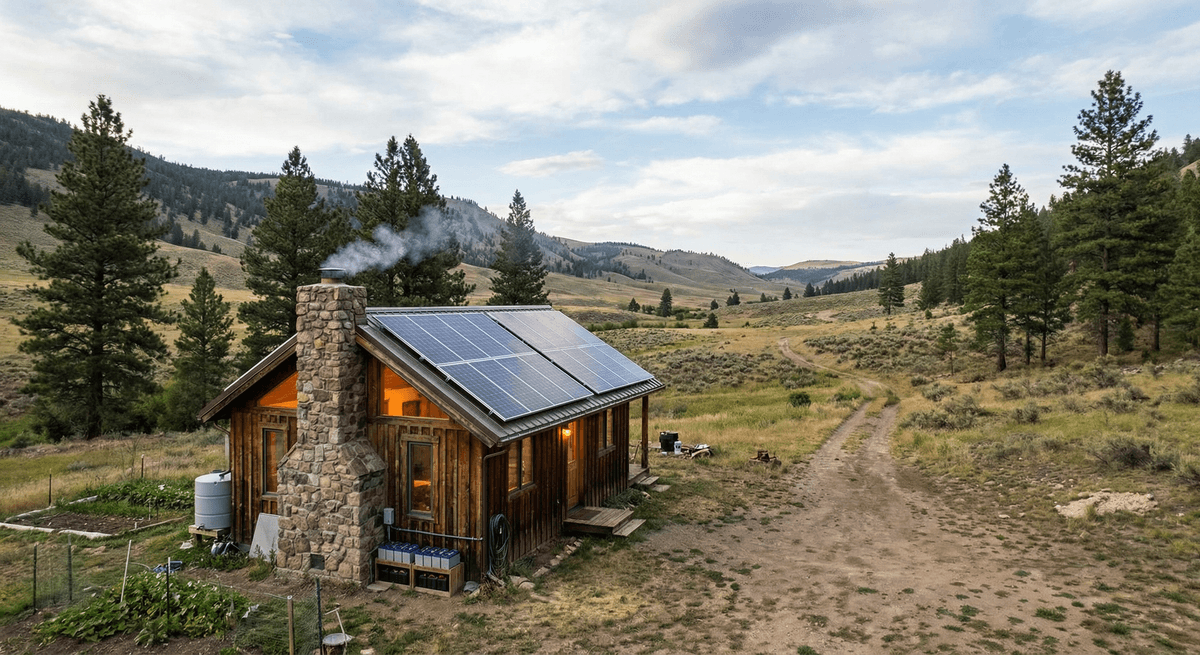
Year-Round vs Seasonal
- Year-round: Size for winter peak sun hours and your highest typical daily use. Plan for 2–5 days of autonomy depending on weather. See winter and low-sun sizing.
- Summer-only: You can size for summer sun hours and maybe 1–2 days autonomy. Smaller, cheaper system.
Typical Cabin Loads
List everything: lights (LED), fridge, phone/laptop, pump if you have one, occasional power tools. Load list each item (watts × hours), add for inverter loss, then use that daily Wh in the sizing formula or WattSizing calculator.
Battery and Chemistry
For a cabin, LiFePO4 is usually better long-term: more usable capacity, better cycle life, less maintenance. Lead-acid is possible if budget is very tight and you accept shorter life and 50% DoD.
Voltage and Components
- Small cabins (under ~1.5 kW): 12V is OK.
- Larger (1.5–3 kW): 24V is a good balance. See 12V vs 24V vs 48V.
- Size inverter for your AC loads and surge; size MPPT for array and battery voltage.
Use the WattSizing calculator with your loads, worst-month sun hours, and desired days of autonomy to get recommended panel and battery size for your cabin.


