
Sheds, workshops, and tiny homes often need a small off-grid system: lights, maybe a fan, tool charging, and sometimes a mini-fridge or small power tools. The same sizing principles apply; the scale is just smaller.
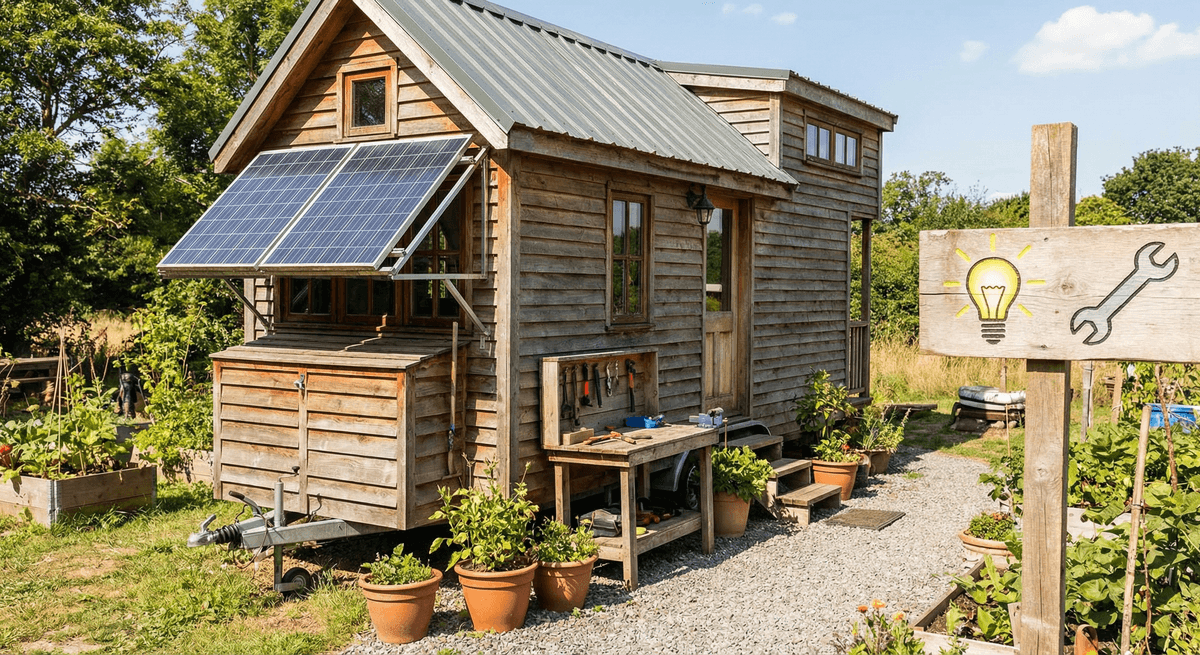
Typical Loads
- Shed/workshop: LED lights (10–30 W), battery chargers (10–50 W), occasionally power tools (100–500 W). Often 200–800 Wh/day depending on use.
- Tiny home: Lights, fridge, fan, phone/laptop, maybe a small TV or heater. Can be 1,000–3,000+ Wh/day; do a load list.
Sizing Steps
- Daily use (Wh): List each load (watts × hours per day). Add for inverter loss if you have AC loads. See calculate daily energy use.
- Peak sun hours: Use a conservative value for your location (or worst month for year-round use).
- Array: Daily Wh ÷ sun hours ÷ 0.75; round up. Small systems often 100–400 W (shed) or 300–1,000 W (tiny home). See how many panels.
- Battery: Daily Wh × days of autonomy ÷ DoD. For shed, 1–2 days is common; tiny home, 2–3. LiFePO4 is ideal for weight and life. See how many batteries.
- Voltage: Small setups often 12V; if you go over ~300–400 W of solar or need more capacity, 24V can simplify wiring. See 12V vs 24V vs 48V.
- Inverter: Only if you have AC loads. Size for continuous and surge. MPPT is worth it even for 200–400 W; see MPPT vs PWM.
Summary
List loads → daily Wh. Size panel and battery with sun hours and days of autonomy. Prefer 12V or 24V, LiFePO4, and MPPT. Use the WattSizing calculator to get exact numbers for your shed, workshop, or tiny home.


