
A good off-grid solar sizing calculator turns your location, loads, and preferences into recommended panel capacity, battery size, inverter, and charge controller. This guide explains what to enter and what you get so you can use tools like WattSizing with confidence.
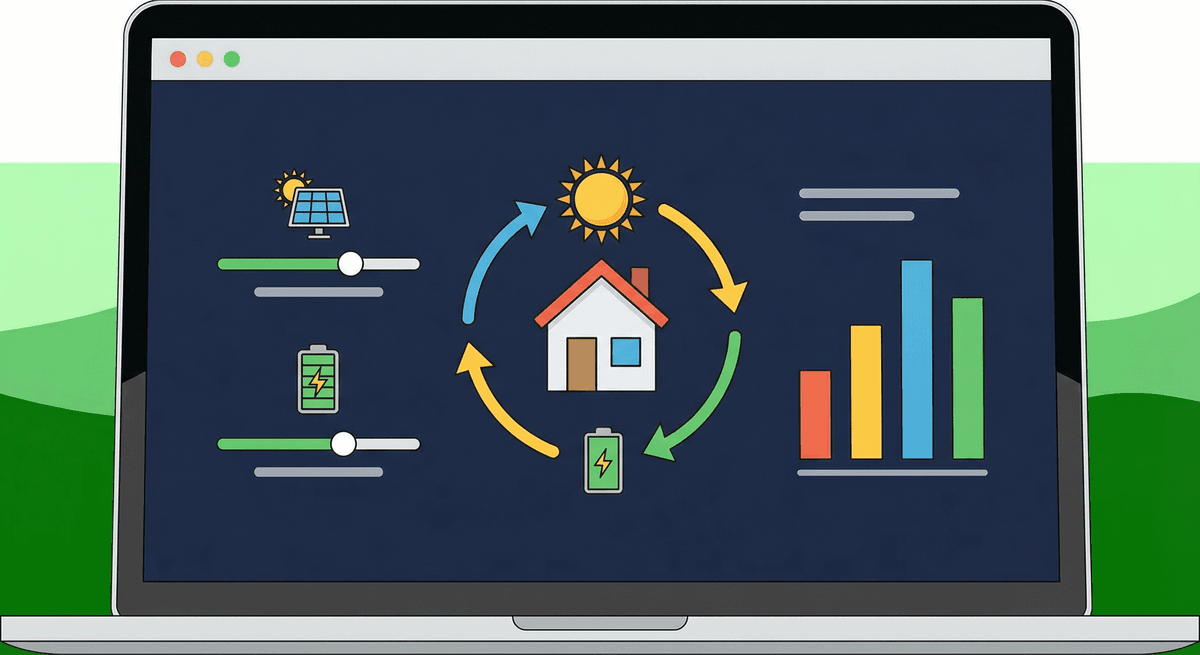
What You Enter
Daily energy (Wh) or load list
Either type your total watt-hours per day or add appliances (watts × hours). The calculator uses this to size panels and battery. See how to calculate daily energy use and load list guide.
Peak sun hours
Your location’s equivalent full-sun hours per day. Use the worst month for year-round reliability. See peak sun hours explained.
System voltage
12V, 24V, or 48V. Affects cable and component choice. The calculator may suggest one based on system size.
Battery chemistry
LiFePO4, lead-acid, or (where supported) sodium-ion. This sets depth of discharge and how many batteries you need.
Days of autonomy
How many days of battery backup you want. See days of autonomy.
Optional
Peak load (W) for inverter sizing; panel wattage preference; location for sun hours.
What You Get
- Solar array size (W): Total panel capacity. From daily use ÷ sun hours ÷ efficiency. See how many panels.
- Battery capacity (Wh or kWh): From daily use × days of autonomy ÷ DoD. Often also in Ah at system voltage.
- Inverter (W): To cover your AC loads and surge. May be suggested from your load list.
- Charge controller (A): MPPT size from array power and voltage. See MPPT sizing.
Results are estimates. Round up when choosing real equipment; verify against datasheets and local codes.
Try WattSizing
WattSizing is a free, vendor-neutral off-grid solar sizing calculator. Enter your loads (or daily Wh), peak sun hours, system voltage, battery chemistry, and days of autonomy. You get recommended array, battery, inverter, and MPPT so you can plan or compare systems. Use it alongside our off-grid solar for beginners guide for a full start-to-finish approach.


